

by Cris Corbito
Cris is a General Arts and Science student who volunteers as a Sustainability Ambassador. He is interested in social and climate justice.
Have you ever wondered why we call nature “Mother Nature”?
Given the female connotation, gendering nature as a mother and a female persona enables people to ponder the intersectionality between women’s lives and nature’s struggles in a patriarchal-anthropocentric era.
To hear the term “Mother Nature” is soothing because it implies that she is a mother of all non-living and living things—including non-human living things like fauna, flora, and fungi. This female personification of nature is really innovative as it justifies nature as the great provider and nourisher no matter what your species is. Indeed, nature is a life-giving and life-provider entity who resembles the role of a mother—it does not have to be a human mother—whose love and guidance are enduring and indestructible.
Yet, we live in a paradoxical world where contradictions and complex realities arise due to the fact that humans have only slight power to control the future. Nevertheless, the future of our world lies in our own hands at the present time.
It is also oxymoronic that we refer to nature as “Mother Nature” despite the fact that the world we live in is patriarchal and anthropocentric. Audaciously, it is a question how the human race still proclaims Nature as the mother of all species when her existence is being undermined by existentialist factors: climate change, pollution in air, water, and land, overconsumption, and many more. These threats not only pose significant dooming effects upon the environment but also to the whole civilization itself. Interesting to note that Mother Nature is to provide and nourish her children, yet how can she act as a mother if her motherhood is not respected?
In other words, what kind of children are people if they cannot even show respect to their mothers who give lives and provide them with nourishment until they mature?
It is still a man’s world! The world is built on patriarchal mindsets and principles that have been reinforced for millennia. Undoubtedly, we call her “Mother Nature” because of the societal enforced gender roles and expectations towards women. To simplify, society in general still sees women as having to fulfil their traditional roles as housewives who will ultimately become mothers. In a patriarchal society, Mother Nature is not associated with being a mother simply because she is a respectable being, but it is a tool used by the patriarchal society to encourage women to be subjugated to these traditional roles—a mother and a housewife. Often, mothers and housewives are still expected to perform their roles even if they are being dehumanised and disserviced.
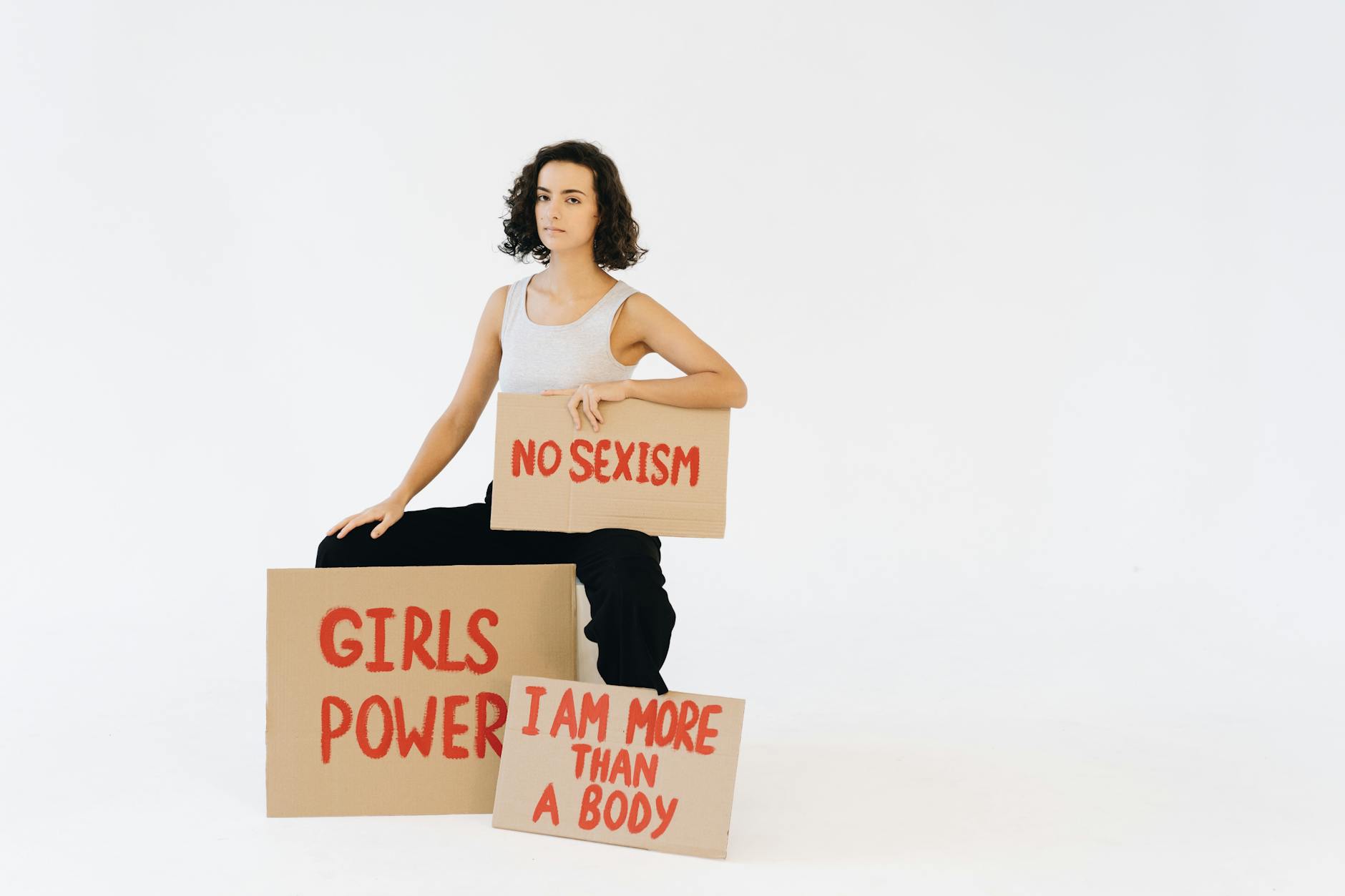
The male gaze is still prominent in society. In order for the status quo to be established for the growth and service for men, women have to be infantilized, subjugated, and oppressed under the dominant patriarchal status quo. The common usage of “Mother Nature” is significant because the male-dominated society only assigns the roles of both women and nature as merely mothers—who have to be just the “second sex” and assume the passive and reproductive role.
On one hand, women become othered and marginalized in a patriarchal society. On the other hand, nature is othered and marginalized in an anthropocentric epoch. To personify nature as a female persona provokes significance as it invites people to see the intersectionality between women’s struggles and nature’s plights towards just and genuine emancipation.
In a capitalist world order, both women and nature are commodities.
The fetishization of women and nature are the beginning of their commodification. Civilization will not commence without women and nature. It is hard to deny that this civilization started due to the fact that women’s and nature’s virginities are taken away with their consent, yet in some cases unfortunately, they are taken away without their prior consent. It was reported 44% of women in Canada aged 15 and older still experience intimate partner relationships; 1 in 3 women experience unwanted sexual behaviour in public; and 1 in 4 women experienced inappropriate sexual behaviours in the workplace. Undeniably, some people still treat women as mere sexual objects. As such, women are still reduced to a value where they become possessions of men, and their bodies are treated as commodities to be consumed.
With capitalism, the exploitation of nature is required to give rise to modern civilization. Overconsumption and overspending are also inherent in capitalism, leading nature to its near-extinction. The overexploitation of natural resources has been followed by environmental destruction and man-made disasters. The extinction of lesser-known species, soil degradation, air-borne diseases, and the degradation of ecosystems are just a few instances of the long-term impacts of man’s overexploitation. Nature is commodified because its finite natural resources are being equated to or reduced to monetary value. Many natural resources around the globe are being privatised and marketized.
Hence, both women and nature are victims of patriarchy and capitalism. In other words, capitalism is the catalyst of the degradation of women and the destruction of the environment.
Furthermore, women and nature are thus subjugated to the male gaze. They are targeted by man-made, patriarchal, and male-sponsored oppression and violence. Likewise, they are subordinated to male-dominated hierarchy that reproduces the idea that men are superior over women and nature. In fact, this gendered bifurcation still exists through the misogynist status quo that serves as a hindrance at exerting women’s perspectives and views to be heard in a male-dominated society. It is hard to imagine nature to be equal to men when nature itself is voiceless, and it has to be represented by humans for her existence to be recognized both in culture and politics. It is not easier to go through the needle of women’s rights and environmental advocacy as politics and decision-making is still dominated by men.
Although the world seems to be heading to its destruction, another world is possible. Gendering nature as a female persona can be seen as an empowerment, because it makes the contributions of women and nature more visible, it resurfaces these forgotten significant legacies that have been suppressed through history. Before, women and nature’s values were only reduced to domestic work and life-sustaining entities respectively. More and more, women are taking up space in society and are often the frontrunners in the fight towards a just and more sustainable world.

Many prominent environmentalists are women, with an enduring legacy in the quest for a sustainable society. For instance, due to her famous work, Silent Spring (1962), Rachel Carson became the founder of the environment movement that brought the environment into the mainstream discourse. Other female environmentalists with the likes of Jane Goodall, Vandana Shiva, and Wangari Maathai, have made significant environmental contributions in their fields.
As a matter of fact, the team behind Humber’s Office of Sustainability is run by women! Currently, the fight of this new generation is led by female young environmental activists — thanks to the activism of Autumn Peltier, Greta Thunberg, and so many more.

Together, we can still spread hope and awareness concerning the plights of women and nature. Indeed the future is promising as the future is female.
 Humber's Office of Sustainability